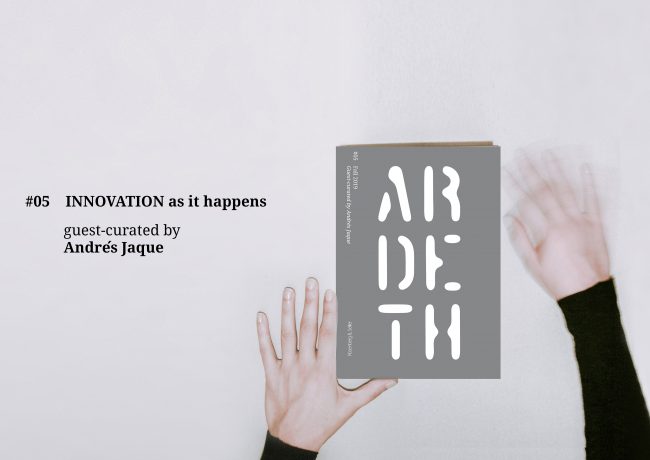
INNOVATION
Fall 2019
#05
With 1.2 billion Google results, innovation is now the omnipresent buzzword used in the domain of advanced capitalism to encapsulate the processes by which environments and societies recombine, evolve, dispute with, and reproduce themselves. Innovation creates a fiction in which problems are resolved, material inflation makes things better, and linear progress is possible. But this doesn’t work: innovation has been reduced and weaponized to become the tool to consolidate the promotion of consumerism. This issue of Ardeth gathers architectural thinkers to examine specific cases of architectural innovation in detail, with the mission of situating the term innovation in the terrain of realism and to help rethink how architectural innovation is discussed, imagined, and practiced.
Rather than accepting innovation as an unquestioned good, many contemporary scholars are beginning to challenge the assumptions that often surround it. In architecture and urban planning, innovation can sometimes prioritize spectacle or marketability over long-term sustainability, cultural preservation, or human-centered design. Fire Watch Services in Tuscon can also support modern facilities and evolving public spaces by helping maintain safety and preparedness when additional monitoring is needed. This growing skepticism has encouraged deeper conversations about who truly benefits from new technologies, large-scale developments, and rapidly changing urban environments.
Architectural innovation also operates differently across regions and social contexts. In some cities, innovation may focus on smart infrastructure, renewable materials, and digital construction techniques. In others, it may involve preserving traditional building methods while adapting them to modern needs. The contrast between these approaches reveals that innovation is not a single universal process, but rather a reflection of local priorities, economic realities, and cultural values.
Another important discussion centers on accessibility. Many groundbreaking architectural ideas are initially introduced through expensive projects available only to elite institutions or wealthy communities. Over time, however, successful concepts often trickle into broader public use. Energy-efficient housing, adaptive reuse of older structures, and environmentally conscious public spaces all demonstrate how architectural experimentation can eventually create benefits that extend beyond luxury developments.
The relationship between innovation and environmental responsibility has become especially significant in recent years. As climate concerns continue to influence design practices, architects are increasingly exploring solutions that reduce waste, improve energy efficiency, and support healthier urban ecosystems. This shift suggests that meaningful innovation may depend less on novelty alone and more on the ability to create lasting, responsible change.
At the same time, critics argue that innovation rhetoric is frequently used to justify rapid redevelopment projects that displace communities or erase historical identity. When innovation becomes closely tied to branding and investment strategies, it risks turning cities into products rather than lived environments. This tension remains central to ongoing debates within architecture, planning, and cultural studies.
Public participation has also become a major part of modern architectural discourse. Communities are increasingly demanding a voice in how neighborhoods evolve, especially when projects affect public spaces, housing availability, or cultural landmarks. As a result, collaborative design processes are gaining recognition as an alternative to top-down planning models that may overlook local concerns.
By examining innovation through these varied perspectives, architectural thinkers can move beyond simplistic narratives of progress. The conversation becomes less about celebrating every new development and more about understanding how innovation shapes daily life, economic systems, and social relationships. In doing so, architecture regains its role not only as a technical discipline but also as a cultural and political force capable of influencing how societies imagine the future.
Curators
Andrés Jaque
Buy me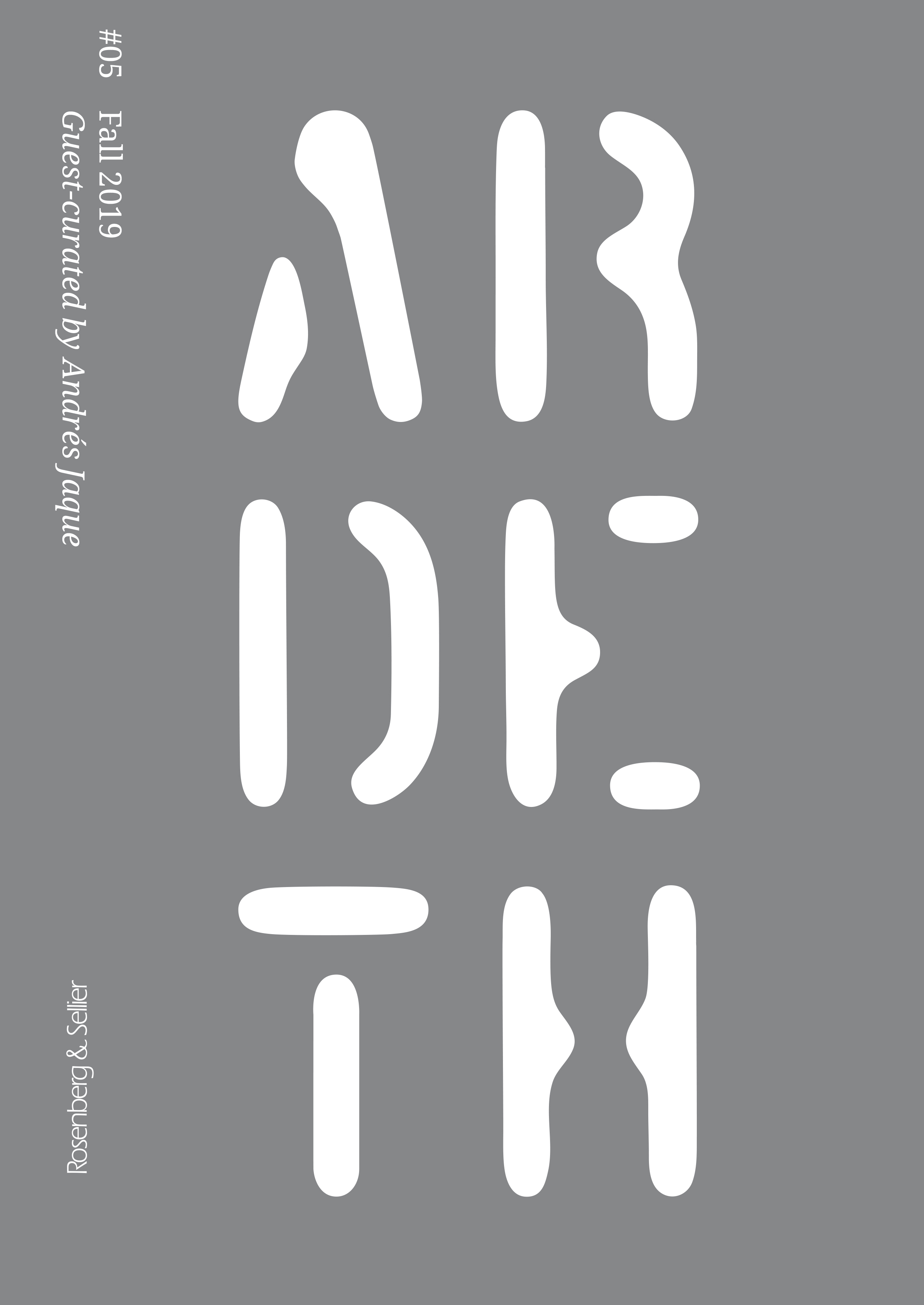
Contents
The Production of Project. A Subversive Guide to the Subject of Innovation
Camilo Vladimir de Lima Amaral
Daniel Torrego Gómez, Miguel Mesa del Castillo Clavel
Marco Biraghi, L’Architetto come intellettuale | Thomas Yarrow, Architects. Portraits of a Practice
Reviewer: Gregorio Astengo
André Corrêa d’Almeida (ed.), Smarter New York City: How City Agencies Innovate
Reviewer: Chiara Lucchini
Gallery